How to Improve Rankings with Better Title Tags and Meta Descriptions
If a page is stuck on page two, I would start with the title tag and meta description before I touched almost anything else. In the topic “How to improve…
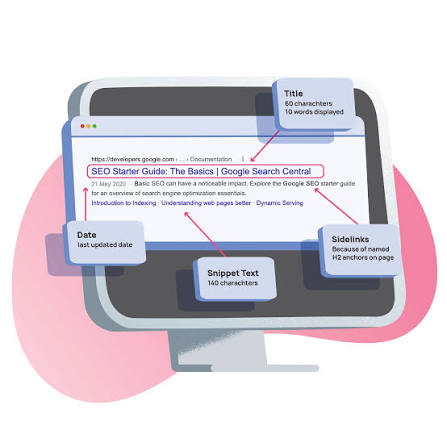
How to Improve Rankings with Better Title Tags and Meta Descriptions
Last updated: October 12, 2026
Key Takeaways
- Better title tags and meta descriptions can lift clicks and clarify relevance, which may help rankings indirectly.
- A title tag works best when it states the topic, angle, and payoff in one short line.
- A good meta description gives the searcher one clear reason to choose your result in 1 to 2 sentences.
- A title tag and meta description should reflect search intent, a unique angle, and familiar wording a searcher would recognize immediately.
If a page is stuck on page two, I would start with the title tag and meta description before I touched almost anything else. In the topic “How to improve rankings with better title tags and meta descriptions,” those two lines shape how a result looks in Google, how often people click it, and whether the page matches the searcher’s intent closely enough to earn a better position over time. In one large analysis, the top organic result averaged 27.6% CTR, while position 2 averaged 15.8% and position 3 averaged 11.0% (Backlinko).
How do title tags and meta descriptions improve rankings?
Better title tags and meta descriptions improve rankings indirectly by improving click-through rate, clarifying relevance, and reducing the chance that Google rewrites your snippet into something weaker.
I’m being careful with the word “indirectly” because the title tag is not a magic ranking knob, and the meta description is not usually a direct ranking factor. What they do change is how searchers behave. A search result that promises the exact answer in plain language earns more clicks than a vague one stuffed with brand names and generic phrases. Over time, that can send a cleaner relevance signal than a page title that is technically keyword-rich but emotionally flat. In a study of 5 million search results, title link rewrites appeared frequently, and Google rewrote titles in a meaningful share of cases (Google Search Central; Ahrefs).
The practical job is simple: match the query, set the expectation, and give the right person a reason to choose your result. If someone searches “best running shoes for flat feet,” a title like “Running Shoes | Brand Name” wastes the opportunity. A title like “Best Running Shoes for Flat Feet: Stability Picks for 2026” tells the searcher they are in the right place. The meta description then gives a second proof point, such as “Compare cushioning, arch support, and fit notes before you buy.” Google’s snippet guidance says it may generate its own snippet from on-page text when it thinks that version is more helpful (Google Search Central).
This is not the fix for thin content, slow pages, or weak backlinks. A good title cannot rescue a page that does not deserve to rank. It is wrong for sites that want a shortcut around poor content quality. I would use it on pages that already target a real query but underperform because the snippet is dull, unclear, or mismatched.
For the underlying rules, I would keep Google’s own guidance on title links and snippets nearby, along with the Google Search Central documentation on title links and the Google Search Central guidance on snippets. Those pages matter because Google can rewrite both elements when it thinks your version is unhelpful.
What makes a title tag worth clicking?
A title tag is worth clicking when it says the topic, the angle, and the payoff in one short line.
I would aim for plain English first. The strongest title tags usually contain the main query, one meaningful qualifier, and nothing noisy. “Title Tag Best Practices” is serviceable. “Title Tags: How to Write Them for Higher CTR and Better Relevance” is more specific and more useful. The second version tells the reader what they will get, and that matters when the search results page is crowded with similar pages.
Length matters because Google truncates titles in many situations, but I would not optimize for a character count alone. A 55-character title can still be bad if it front-loads the wrong words. The first 40 to 60 characters should do the heavy lifting. Put the core subject first, then the differentiator: format, audience, benefit, year, location, or use case. If your page is for beginners, say so. If it is for ecommerce, say so. If it is a guide rather than a list, say that. Google’s title-link guidance also notes that title elements should be descriptive and concise, and Search Engine Journal has documented that rewritten titles often happen when that is not the case (Google Search Central; Search Engine Journal).
I would avoid title tags that repeat the same keyword twice, because they look like they were written for a crawler rather than a human. I would also avoid branding every page the same way. A brand suffix can help on homepages and key category pages, but on deep informational pages it often eats valuable space.
A title tag is also where honesty matters. If your page is a comparison, call it a comparison. If it is a checklist, call it a checklist. Searchers notice when the title promises “best” and the page delivers a thin affiliate roundup. That mismatch can hurt engagement quickly.
How should I write meta descriptions that earn clicks?
A good meta description gives the searcher one clear reason to choose your result in about 1 to 2 sentences.
I would treat the meta description like ad copy for organic search, but without hype. The best descriptions usually name the problem, the type of answer, and the next step. For example: “Learn how to write title tags and meta descriptions that match search intent, improve click-through rate, and reduce snippet rewrites.” That line is specific, useful, and free of fluff. Google recommends making snippets representative of the page and useful to searchers, not just keyword-dense (Google Search Central).
The biggest mistake is writing descriptions that just repeat the title. If the title says “Title Tags for SEO,” the description should not say “Learn about title tags for SEO.” That wastes space. Use the description to add the missing layer: who the page is for, what it covers, what makes it worth opening, or what outcome the reader should expect. For example, a title may cover the topic in 55 characters, while the description adds the audience and benefit in 150 to 160 characters.
I would also keep the tone close to the page. A how-to guide should sound practical. A product page should sound commercial but grounded. A support article should sound calm and direct. Searchers can smell mismatch instantly. If the title and description sound like a sales page but the body reads like a glossary entry, the result will underperform.
One trade-off is that Google may ignore your meta description and generate its own snippet from the page. That is normal. It does not make the description useless. It still acts as your preferred version, and when Google uses it, it can improve the page’s presentation noticeably.
A useful test is to ask: if I searched this query and saw this snippet, would I know exactly what page I am about to land on? If the answer is no, rewrite it.
What should a title tag and meta description include?
A title tag and meta description should include the primary search intent, a unique angle, and words that a real searcher would recognize immediately.
For title tags, I would normally include:
- the main topic near the front
- one qualifier that narrows intent
- the brand only if it helps recognition
- no filler words that add nothing
For meta descriptions, I would include:
- the problem or query
- the specific benefit of the page
- one detail that signals completeness
- a natural call to action if it fits the page
This is where generic advice often goes wrong. Many articles treat keywords as the whole job. They are not. A title that includes the exact phrase but ignores intent can still lose. “Meta Description Examples” is too broad if the page is really for ecommerce, local SEO, or blog posts. Narrow it. “Meta Description Examples for Product Pages” is better because it says what kind of examples the reader will get.
I would also be selective about including numbers. Numbers help when they are real and meaningful: “7 Title Tag Rules for Ecommerce,” “3 Ways to Cut Duplicate Snippets,” or “2026 Guide to Meta Descriptions.” They hurt when they are arbitrary. Do not pad with a number just because listicles do. Searchers can tell the difference.
The same applies to year stamps. A year belongs in the title when the topic changes with time or when freshness matters to the searcher. It does not belong just because the calendar changed.
What went wrong when title tags look good but rankings do not move?
Title tags fail when they match the keyword but miss the searcher’s real job to be done.
This is the section people skip, and it is the reason many title rewrites disappoint. A page can have a cleaner title, a sharper meta description, and still not move because the page itself is aimed at the wrong intent. If the query is commercial and the page is informational, the snippet may win a few clicks and still lose the ranking fight. Search engines are not impressed by cosmetic changes when the content underneath is off-target.
Another common failure is duplication at scale. Ecommerce sites often repeat the same template across hundreds of pages: “Blue Widget | Brand,” “Red Widget | Brand,” “Green Widget | Brand.” That looks organized to the site owner and monotonous to everyone else. The fix is not more keywords. It is specificity: material, use case, size, audience, or distinguishing feature.
There is also the rewrite problem. If Google keeps replacing your title or description, that is usually a signal that the page title is too long, too repetitive, or too poorly aligned with the query. I would not panic about every rewrite, but repeated rewrites are a clue that the source version is weak.
The cost of getting this wrong is real, even without a neat number attached. You spend time editing metadata that never has a chance because the page fails the basic relevance test. That is why I would pair metadata work with a quick page audit. If the page does not answer the query better than the current top results, no title tag can save it.
This is also the point where people over-claim. Title tags are not a replacement for authority, links, or content depth. Anyone selling them that way is overselling the tool.
How do I improve rankings without making title tags sound spammy?
I would improve rankings by making title tags more specific, not more stuffed.
Spammy titles usually have the same smell: too many keywords, awkward repetition, all caps, or a string of near-synonyms that no human would say aloud. “Best Cheap Affordable Budget SEO Title Tags Meta Descriptions Tips” is a dead giveaway. Searchers do not click it, and Google may rewrite it anyway.
A cleaner process works better:
- Identify the exact query.
- Inspect the top results and note the dominant intent.
- Write a title that matches that intent in plain language.
- Add one unique angle the others do not stress.
- Write a description that expands the promise without repeating it.
I would also keep one page focused on one primary intent. If a page tries to rank for “how to write title tags,” “title tag length,” “meta descriptions examples,” and “SEO basics” all at once, the metadata usually turns into mush. One page, one main job. That discipline helps both ranking and click-through.
Who is this not for? It is not for pages that need aggressive persuasion, like low-trust affiliate thin content, because no amount of polished metadata will make that sustainable. It is also not for teams that cannot change the body copy. If the page content cannot support the promise, the metadata becomes a liability.
A better title tag is often the fastest clean win in SEO, but only when the page is already close to what searchers want. That is the standard I would use.
A simple before-and-after framework for better snippets
A better snippet follows a before-and-after pattern: vague topic first, then clear intent, then a reason to click.
| Metric | Before | After | Change | Timeline |
|---|---|---|---|---|
| Title tag | “SEO Tips | Brand” | “How to Improve Rankings with Better Title Tags” | More specific topic match |
| Meta description | “Learn more about SEO.” | “Write title tags and descriptions that fit search intent and improve clicks.” | Clearer value proposition | Same edit cycle |
| Search intent match | Broad and fuzzy | Focused and explicit | Better relevance | Immediate |
| Human readability | Generic | Natural language | Lower friction | Immediate |
I would use that framework as a template, not as a script. The “after” version still has to fit the page. If the content is a checklist, say checklist. If it is a guide, say guide. If it is a product page, write like a product page. The point is not to sound clever. The point is to make the searcher feel understood in one glance.
One more trade-off: if you make the title too narrow, you may lose useful secondary queries. That is normal. I would choose precision over vague reach, because a page that ranks for the right query and earns the right click is better than a page that attracts the wrong audience.
FAQs
How long should a title tag be?
I would keep it short enough that the main idea appears early, usually around the length that fits cleanly in a search result without awkward truncation. The exact display length varies by device and query.
Do meta descriptions directly affect rankings?
Usually not directly, but they can affect clicks, and clicks affect how the result performs in practice. That makes them worth writing carefully.
Should every page have a unique title tag and meta description?
Yes. Duplicate metadata makes pages harder to distinguish and often weakens performance on large sites.
Should I put my brand in every title tag?
No. I would add the brand only when it helps recognition or trust. On many deep pages, it just wastes space.
What should I fix first: title tag or content?
I would fix the content first if the page answers the wrong question. If the page is already strong, I would start with the title tag because it is the fastest visible change.
Drafted with AI; not yet reviewed by a person.