How to Improve Search Rankings for Existing Pages Stuck on Page Two
Quick Answer: If your page is stuck on page two, a targeted fix can often move it into page one within 2–8 weeks by improving intent match, title clarity…

Magnifying glass on a blue background
Last updated: October 12, 2026
Quick Answer: If your page is stuck on page two, a targeted fix can often move it into page one within 2–8 weeks by improving intent match, title clarity, and missing subtopics. This article on how to improve search rankings for existing pages that are stuck on page two focuses on the page, query, and search results in that order, because that is usually where the real opportunity is.
If a page is stuck on page two, the fix is usually not “add more keywords.” It is to find the specific reason Google has already decided the page is useful but not yet the best result for that query, then improve the page in the one or two places that matter most. That usually means tightening search intent match, strengthening the page’s proof, and removing friction that keeps it from earning clicks, links, or engagement. Google’s Search Central documentation emphasizes making content helpful for people first, and that is a good lens for this work.
What page-two rankings usually mean
A page on page two is already in the race, but it is not winning the comparison Google is making for that query. In practical terms, page two usually means the page is relevant enough to be indexed and considered, yet weak in one or more of four areas: intent match, depth, authority, or click appeal. I would treat page-two positions as a diagnostic signal, not a failure, and if the topic affects health, legal, or financial decisions, consult a qualified professional before making major changes.
This is where generic advice goes wrong. People often assume the page needs “more content.” Sometimes it does. Just as often, the page is too broad, too thin on the exact subtopic searchers want, or missing the trust cues the current top results have in common. A 3,000-word page can still lose to a 900-word page if the shorter page answers the query faster and cleaner.
The right starting point is the exact query and the SERP around it. Look at the first page of results and note the dominant format: guides, product pages, comparisons, local pages, tools, or definitions. If the top 10 results all satisfy the query in a similar way, your page needs to look more like that format. If the intent is mixed, your page needs a clearer angle. Google’s Search Quality Rater Guidelines also reinforce the importance of matching content to what searchers want.
I would not start with a redesign or a rewrite from scratch. I would start with a gap audit: what the current top pages include that yours does not, and what your page includes that the searcher does not actually need. Page-two fixes are usually subtraction plus precision.
How do I know why a page is stuck on page two?
You know by comparing the page against the query, the search results, and the page itself in that order. That sounds obvious, but many audits start inside the CMS and never leave it. The fastest route is often to inspect the query in Google Search Console, open the live SERP, and then read the page as if you were the searcher.
I would check three things first. One, which query variants are already bringing impressions? A page ranking on positions 11–20 for several related terms usually has a topic cluster problem, not a single-keyword problem. Two, what content format is rewarded on page one? A how-to page that ranks against listicles or tools may be mismatched in structure. Three, what is the page’s engagement path after the click? If the title promises one thing and the opening delivers another, users bounce fast, and the page gets weaker signals.
There are a few common patterns. A page may have the wrong primary intent: informational content trying to rank for a commercial query, or a category page trying to satisfy a tutorial search. It may also be cannibalized by another page on the same site that targets a near-identical phrase. That problem is often invisible until you compare rankings across the site, not just on one URL. Ahrefs’ guide to keyword cannibalization is a useful reference if you need a practical framework.
A simple rule helps: if you cannot explain in one sentence why your page deserves to outrank the current page one results, you do not yet know the problem well enough to edit the page. You need that sentence before you change a single heading.
The ranking fixes that usually move page-two pages
The fixes that move page-two pages are usually specific, not dramatic. I would start with the highest-friction elements first: title tag, intro, heading hierarchy, missing subtopics, internal links, and proof. Each one can matter more than a full rewrite.
A title tag should match the query’s wording and promise a clear benefit or outcome. If the page already ranks around positions 11–15, the title is often the easiest place to improve click-through rate without changing the whole page. The opening paragraph matters just as much. The first 100 words should tell the visitor exactly what the page covers, who it is for, and what problem it solves. If the opening wanders, the page loses readers before they get to the useful part.
Then I would map the content against the top-ranking pages. Look for missing sections, not just missing keywords. If the top pages all explain costs, steps, or pitfalls and your page skips one of those, you have a content gap. If the query is transactional, add decision-making details such as specs, use cases, limitations, and comparison points. If it is informational, add examples, edge cases, and concise answers to follow-up questions. For search intent research, the Semrush guide on search intent is a solid external reference.
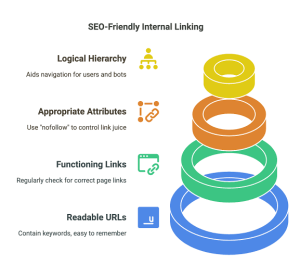
Internal links are often underrated. A page that is buried in the site architecture may be useful, but it is not getting enough internal authority. Link to it from relevant, strong pages using natural anchor text. Do not force exact-match anchors everywhere; that looks artificial and usually reads badly. If you need a model, Google’s SEO starter guide covers how internal links help search engines discover content.
I would also check for freshness. A page can stagnate simply because it looks stale beside newer competitors. Updating dates alone does little. Updating the actual substance does more: new examples, clearer sections, cleaner formatting, and better answers to the current version of the query.
What should I change on the page first?
I would change the page’s intent match before I change its word count. A 1,200-word page that answers the right question will usually beat a 2,500-word page that rambles around it.
The first pass is structural. Make the H1, title tag, and opening paragraph all point at the same search intent. If the page is supposed to answer “how to improve search rankings for existing pages,” then the first screen should say exactly that in plain language. Don’t hide the point under a story, a slogan, or a generic SEO definition. Searchers on page two do not need a lecture on why SEO matters; they need the next move.
The second pass is topical completeness. Compare your page with the current top five results and list the subtopics they cover that you do not. Common misses include:
- diagnosing intent mismatch
- comparing content against page-one competitors
- fixing cannibalization
- improving internal linking
- strengthening titles and snippets
- updating thin or outdated sections
- improving the page’s proof, examples, or specificity
The third pass is readability. Short paragraphs, concrete subheads, bullets where appropriate, and direct language help readers find the answer faster. That is not “writing for short attention spans.” It is respecting the job the page has to do. A page can be deeply informed and still easy to skim.
I would not recommend adding a lot of new text just to hit a word count. That often dilutes the page. Add only the sections that solve an actual gap. If the page is already complete but underperforming, the issue may be authority, not depth. For wording and clarity checks, the Hemingway Editor can be a useful supporting tool.
What went wrong on a page-two page?
The most common failure is fixing the wrong layer of the problem. I see pages that are rewritten end to end when the real issue is one weak title tag, one unclear intent mismatch, or one competing URL on the same site. That wastes time and often delays the gain.
A page can also stall because the content is “good” but not differentiated. Page one is full of good content too. If your page says the same thing in the same order as everyone else, Google has little reason to move it up. The page needs a sharper angle, a better explanation, a more useful table, or a more complete answer to the exact query.
Another setback is over-optimizing. Repeating the keyword in headers, stuffing synonyms into every paragraph, or adding awkward internal links can make the page worse, not better. The page may become less readable and less credible. That is especially risky on topics where trust matters, such as finance, health, legal, or technical content.
Cannibalization is another expensive mistake. If two or three pages target nearly the same query, they can split signals and hold each other down. The fix is usually consolidation, differentiation, or a clearer hierarchy of intent. I would rather have one strong page than three weak ones competing for the same result.
The last failure is impatience. Page-two pages do not always move in a neat straight line. A page may jump, fall back, and then stabilize after Google reprocesses the updates and the page earns stronger engagement or internal authority. If the changes were real, give them time before making another round of edits.
Before and after: what to measure
You should measure the page itself, not just the ranking. Rankings can move for reasons that do not reflect quality, and quality improvements can take time to show in position changes. I would track impressions, clicks, click-through rate, average position, and the number of queries the page ranks for in Search Console. Google Search Console’s own documentation explains these performance metrics clearly.
Here is the comparison I would use for a page-two optimization project:
| Metric | Before | After | Change | Timeline |
|---|---|---|---|---|
| Average position | Page two range | Page one range, if the page improves | Directional improvement | 2–8 weeks after edits |
| Click-through rate | Baseline from Search Console | Higher if title and snippet improve | Often the fastest visible change | 1–4 weeks |
| Impressions | Baseline | Usually steadier than clicks | Can rise as relevance broadens | 2–12 weeks |
| Queries ranking | Narrow set | Wider related set, if content gap closes | More topic coverage | 2–8 weeks |
| Internal links | Baseline | More relevant links from strong pages | Better crawl and authority flow | 1–4 weeks |
The important part is not the table shape. It is the habit. If rankings rise but clicks do not, the title and snippet still need work. If clicks rise but rankings do not, the page may be appealing but not comprehensive enough. If impressions rise across more queries, the page is becoming more relevant to the topic cluster, which is exactly what you want.
I would review changes in two windows: early movement in the first few weeks, and more stable movement after a couple of months. That keeps you from overreacting to a temporary jump or a short dip.
When should I leave a page alone and start a new one?
I would leave the page alone only if the query intent clearly does not match the page’s purpose, or if the topic has become too broad for one URL. Sometimes the right answer is not to rescue the page but to split the topic into separate pages with different intents.
A page should be rewritten in place when it is close to the right answer: same topic, wrong emphasis, weak structure, thin coverage, or poor internal linking. A new page makes more sense when the existing URL tries to do too many jobs at once. For example, a page that tries to rank for both “how to fix page two rankings” and “SEO audit services” is probably two pages pretending to be one.
This is also the point where honesty matters. Not every page can be saved quickly. Some pages are held back by stronger competitors, weaker domain trust, or a site structure that does not support the topic well. If the site itself is small or new, the page may need supporting articles, better internal links, and time, not just a copy edit.
My rule is simple: if the page already has search demand and is close to the target intent, improve it. If it is the wrong format for the query, build the right page instead. Chasing rankings with endless revisions on the wrong URL is one of the easiest ways to waste a month.
FAQ
How long does it take for a page-two page to move?
It usually takes a few weeks to a few months, depending on how much changed and how competitive the query is. Title and snippet changes can show faster than deep content or authority changes.
Should I add more words to a page stuck on page two?
Only if the page is missing real subtopics. More words alone do not help if the page already answers the query well. Better coverage helps; padding does not.
Do internal links really matter for page-two rankings?
Yes, because they help search engines find the page, understand its importance, and connect it to related topics. A page with weak internal support often underperforms.
What is the biggest mistake people make with page-two pages?
They rewrite the page without diagnosing the actual problem. If the issue is intent mismatch, cannibalization, or poor snippet appeal, a general rewrite will not solve it.
Should I update the publish date?
Only if the content is genuinely updated. A fake freshness signal is not a strategy, and it can undermine trust if the page does not change in substance.
Key takeaways
- A page stuck on page two is usually close, not broken.
- The fastest wins often come from intent match, title clarity, and missing subtopics.
- Internal links and site structure can hold a good page back.
- A rewrite is not always the right move; sometimes consolidation or a new URL is better.
- Measure clicks, queries, and impressions alongside rank so you know what actually improved.
Drafted with AI; not yet reviewed by a person.