How Search Engines Rank Pages, From Crawl to Results
How search engines rank pages: the ranking process from crawl to results: Search engines rank pages through a chain: they crawl the web, store what they…
How Search Engines Rank Pages, From Crawl to Results
Last updated: October 12, 2026
Key Takeaways
- A page ranks only after discovery, understanding, indexing, and query matching.
- Relevance, quality, and trust signals decide whether a page gets exposure.
- Indexing means inclusion, not a promise of page-one visibility.
- The costliest errors often happen before ranking starts, especially when published pages are assumed to be visible.
Search engines rank pages through a chain: they crawl the web, store what they find, judge whether a page deserves to be indexed, score it against the query, then reorder the candidates in milliseconds. This article explains how search engines rank pages, from crawl to results, and the short answer matters because most ranking advice skips one of those steps and blames “SEO” for a problem that started much earlier.
What actually happens between a crawl and a ranking?
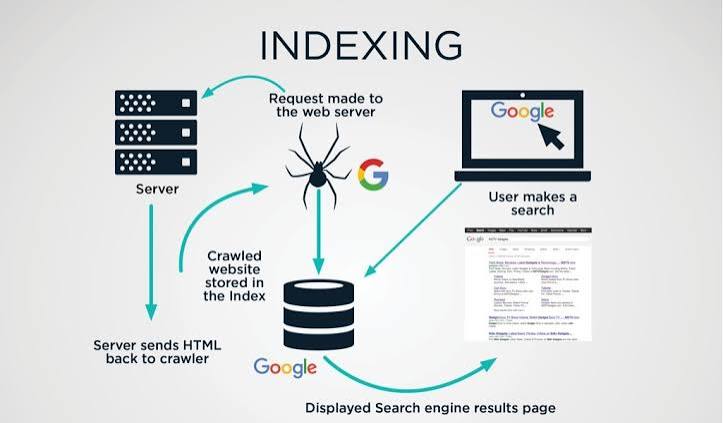
A page can only rank after a search engine has found it, understood it enough to store it, and decided it is worth showing for a query. That process usually has four gates: crawling, rendering and parsing, indexing, and ranking.
Crawling is discovery. A bot such as Googlebot or Bingbot follows links, reads sitemaps, and revisits pages on its own schedule. If a page is blocked by robots.txt, buried behind broken internal links, or trapped in a login wall, the crawler may never see it. That sounds obvious, but it is the first place many pages fail.
Rendering and parsing come next. Modern pages are often built with JavaScript, so the engine may need to fetch code, load assets, and extract the main content from the finished page. If the server responds slowly or the page depends on scripts that fail, the engine may get an incomplete version.
Indexing is storage plus understanding. The engine decides whether the page is canonical, what topic it covers, and which signals to keep. A page can be crawled and still not be indexed if the engine sees thin content, duplication, or technical conflicts.
Ranking is the last step, and it is query-specific. The engine compares the indexed page with the searcher’s words, the page’s usefulness, the site’s reputation, freshness where needed, location, language, and many other signals. A page does not have “the” rank. It has a different rank for every query.
The key point is this: ranking is not a single score handed out by a spreadsheet. It is a filter-and-order system. If a page fails one earlier gate, no amount of “better titles” fixes the final result.
How do search engines decide what to crawl first?
They crawl what they think is worth revisiting, and they do that with limited time and bandwidth. That limited budget is why crawl priority matters on large sites.
Search engines do not visit every URL equally. They weigh internal links, sitemaps, update frequency, duplicate patterns, page importance, and server response speed. A homepage linked from everywhere is easy to find. A product filter page with endless parameter combinations is not. A fresh news article may be crawled quickly because it attracts links and changes often. An orphaned page might wait a long time or never get revisited.
This is where a generic SEO article often gets lazy and says, “Just improve crawlability.” That phrase hides the real trade-offs. When a site has tens of thousands of URLs and many low-value variations, the problem can be crawl waste, because the bot spends time on pages the site owner would rather ignore and discovery of important pages can slow.
Sitemaps help because they provide a clean list of URLs the engine should know about. They do not guarantee crawling, and they do not force indexing. They do, however, give the engine a structured hint, especially on large or new sites. Google’s own Search Central documentation says sitemaps help search engines discover URLs, and the Bing Webmaster Guidelines similarly recommend clear site structure and sitemaps.
I would treat crawl priority as a site architecture problem, not a metadata problem, but a technical SEO professional should review it when the site is large or complex. If the important pages are several clicks deep, duplicated across parameters, or poorly linked, the crawler may behave exactly as instructed and still miss the pages you care about.
Who this is not for: tiny sites with a dozen pages and no technical issues usually do not need to obsess over crawl budget. Large catalogs, news sites, marketplaces, and faceted navigation systems do.
What signals matter once a page is crawled?
A page is judged first on relevance, then on quality, then on trust signals that help the engine decide whether it deserves exposure. That order is cleaner than the myth that “backlinks rank pages” all by themselves.
Relevance starts with the query and the page’s language. Search engines look at titles, headings, body copy, anchors, structured data, and the terms around the page on the site. A page about “how to fix a leaking valve” should not read like a category page for plumbing supplies. If the topic match is weak, the page may never be considered a good answer.
Quality is harder. Engines use many proxies because they cannot ask every searcher whether the result was helpful. They look for originality, completeness, useful structure, clear intent match, and whether the page seems made for people or only for search engines. Thin pages, doorway pages, and copied content are common failures here.
Trust signals include links from other sites, but not in a crude “more links wins” way. Links still matter because they help establish reputation and discoverability, yet a link from a relevant, authoritative page is not the same as a pile of unrelated mentions. Google’s ranking documentation and the original PageRank paper both support the idea that links are one signal among many, not the whole system. Engines also use site-level signals: consistency of publishing, reputation in a topic area, and signs that the domain is not trying to spam the index.
Structured data can help the engine classify a page, but it is not a ranking charm. It works best when the markup reflects visible content and helps the engine understand entities like products, articles, events, or recipes.
A useful way to think about it: relevance gets you considered, quality gets you kept, and trust helps you outrank similar pages.
Why some pages are indexed but still don’t rank
A page can be indexed and still sit far below page one because indexing is inclusion, not endorsement. The engine has stored the page; it has not promised to show it often.
This is where search intent becomes decisive. A page might match the keywords but miss the purpose behind the query. Someone searching “best running shoes for flat feet” wants comparisons, trade-offs, and likely commercial guidance. A product page with one paragraph and a buy button will not satisfy that intent as well as a detailed guide or well-structured category page. The engine notices that mismatch through user behavior signals, content patterns, and its own classifiers.
Another reason is competition. If 20 pages all cover the same idea, the engine has to choose among near duplicates. Small differences in authority, freshness, clarity, and user usefulness can move one page far above another. That can be frustrating because the losing page may not be “bad”; it may simply be the weaker answer among several acceptable ones.
There is also query variation. A page may rank for one phrase and fail for another phrase that looks almost identical. “How search engines rank pages” and “how Google ranks web pages” are close, but not interchangeable in practice. The first is broad. The second is narrower and may favor Google-specific explanations, case studies, or official documentation.
The hard truth is that a lot of pages are indexed because the engine is being generous, not because they deserve to rank. If a page cannot win on intent, depth, and clarity, the index alone will not save it.
What goes wrong in the ranking process?
The most expensive mistakes happen before ranking even starts, and the worst one is assuming that a page is visible just because it is published.
The first failure is crawl blockage. Robots.txt rules, noindex tags, accidental canonicals, broken internal links, and orphaned pages can keep the engine from reaching the real version of the content. I see this mistake described too casually as “technical SEO,” but the cost is blunt: the page may never enter the race.
The second failure is duplication. A site can produce multiple URLs for the same content through parameters, session IDs, sort orders, printer views, or CMS quirks. The engine then has to decide which URL is canonical. If the signals conflict, the wrong URL can get indexed or the authority can split across duplicates.
The third failure is weak content structure. Even when the topic is correct, the page may bury the answer under vague intros, generic subheads, and filler copy. That hurts both the parser and the person. If a page makes the reader work too hard, it often loses to a cleaner result.
The fourth failure is poor site focus. When a domain covers too many unrelated subjects, its topical signals dilute. That does not mean every site needs to be narrow. It means pages need a clear relationship to the site’s core expertise.
The cost of these mistakes is not abstract. They waste crawl time, delay indexing, split authority, and reduce the chance that the right URL appears for the right query. Fixing ranking often starts by removing problems that prevent ranking from happening at all.
How does the engine turn all that into search results?
The engine takes the indexed candidates, scores them against the query, adjusts for context, and assembles the results page in a fraction of a second. That is the step most people think of as “ranking,” but it is really ranking plus presentation.
At this stage, the engine considers exact and implied meanings. A query can be informational, navigational, commercial, or transactional. The same page may rise or fall depending on which of those intents dominates. Location can matter too. A search for “pizza” in one city should not return the same set of results as the same query in another city.
The engine then applies result formatting. A page might appear as a standard blue link, a featured snippet, a video result, a local pack listing, an image result, or a shopping module. That means “ranking” and “placement on the page” are not identical. A result can be highly relevant and still sit below a map pack or a sponsored block.
Personalization is real but often overstated. Search history, device type, and language can influence what appears, but for most pages the larger forces are relevance, authority, and intent fit. I would not build a strategy around tiny personalization effects unless the site serves a highly local or highly repeat-query audience.
This is also where freshness matters most for time-sensitive searches. A 2026 query about a breaking policy change should not surface a stale 2022 explainer unless the engine thinks it has been updated enough to stay useful.
How can you tell what stage is holding a page back?
A page is held back by the earliest stage that fails to do its job, and the fastest diagnosis is to separate discovery, inclusion, and performance.
If the page is not crawled, look at internal links, sitemap coverage, robots rules, server logs, and crawl errors. If the page is crawled but not indexed, inspect canonical tags, duplication, noindex directives, thin content, and rendering problems. If the page is indexed but underperforms, compare the page with the actual top results for the target query and ask whether the intent match, depth, or trust signal is weaker.
I would use Search Console-style data, server logs, and the live search results page together. One tool alone rarely tells the full story. Logs show bot visits. Search console shows indexing and query performance. The results page shows what the engine currently rewards for that query. Google Search Console and Bing Webmaster Tools are both useful here.
A practical test: search the exact phrase you want to rank for and open the top 5 results. If your page is shorter, less specific, slower, or aimed at a different intent, the engine has a reason to prefer those pages. That gap is usually more useful than vague advice about “more content.”
Before and after: the ranking pipeline at a glance
The table below shows the stages in the ranking process and what changes at each point.
| Stage | Before | After | Change | Timeline |
|---|---|---|---|---|
| Crawl | URL exists on the web | Bot discovers the URL | Discovery begins | Minutes to weeks |
| Render and parse | Raw HTML or script-heavy page | Extracted content and structure | Page becomes understandable | Seconds to days |
| Index | Page is unseen or unclassified | Page is stored and labeled | Eligible for ranking | Hours to weeks |
| Rank | Page has no query-specific position | Page appears for a search term | Ordered against competitors | Milliseconds at search time |
| Re-rank | Static position only | Position shifts by query, device, and context | Results adapt to intent | Continuous |
What should you fix first if a page is not ranking?
You should fix the earliest broken step first, because later fixes do not matter if the page never reaches the next gate.
If the page is blocked from crawling, remove the blocker. If the page is crawled but not indexed, solve the technical conflict or content weakness. If the page is indexed but buried, rewrite it for the query’s actual intent and strengthen the signals that distinguish it from competing pages.
This order matters because it prevents wasted work, though a technical SEO professional should sanity-check the setup on larger sites. I would not polish title tags on a page that is disallowed in robots.txt. I would not build links to a page that canonicalizes elsewhere by mistake. And I would not add 1,500 more words to a page whose real problem is that it answers the wrong question.
The ranking process is less mysterious than it looks. Search engines first need to find the page, then understand it, then trust it enough to keep it, and only then do they decide where it belongs. Most ranking problems come from one missing step, not all of them.
FAQ
How long does it take a page to rank?
It depends on crawl frequency, site authority, and competition, but there is no fixed timetable. A page can be discovered quickly and still take weeks or longer to settle into a stable position.
Can a page rank without backlinks?
Yes, especially for low-competition or highly specific queries, but links still help with discovery and trust. A page with no external reputation usually has a harder time competing on broad terms.
Does Google rank pages the same way Bing does?
No. Both use crawlers, indexes, and ranking systems, but their weighting, presentation, and query handling are not identical. A page can perform differently across engines.
Why does my page rank for one keyword but not a similar one?
Because search intent, wording, and competition can differ even when the phrases look close. The engine may see one query as informational and the other as commercial, or it may prefer a different type of result.
Is indexing the same as ranking?
No. Indexing means the engine has stored the page and understands it well enough to keep it. Ranking means the engine has chosen it for a specific query position.
Drafted with AI; not yet reviewed by a person.